Buying a shade structure for a school or childcare centre isn’t like picking one for a backyard patio. You’re dealing with duty-of-care obligations, council approvals, National Quality Framework considerations, and a lot more foot traffic. The short answer: for most educational settings, a custom shade sail or cantilever structure with a high UPF-rated fabric offers the best mix of coverage, durability and value, but the right choice depends on your site, budget and compliance requirements. Here’s what to weigh up before you commit.
Why Shade Structures Are Essential for Childcare Centres and Schools
Kids spend hours outdoors every day at school and childcare, often during peak UV periods. Shade isn’t a nice-to-have here, it’s a core part of your duty of care.
The Risks of UV Exposure for Children Outdoors
Children’s skin is more sensitive to UV radiation than adults’, and sunburn in childhood is linked to higher skin cancer risk later in life. Outdoor play areas, sandpits, ovals and walkways are all high-exposure zones if they’re left unshaded, especially in the middle of the day.
Regulatory and Duty-of-Care Obligations for Sun Protection
Schools and childcare services carry a legal duty of care to protect children from foreseeable harm, and sun exposure fits squarely into that. Most centres are expected to have a documented sun protection policy that covers shade provision, hats, clothing and scheduling of outdoor activities. Adequate shade structures are usually the practical backbone of meeting that policy, not just a compliance checkbox.
Types of Shade Structures for Educational Settings
There’s no single “best” structure. The right type depends on your space, budget and how the area is used.
Shade Sails
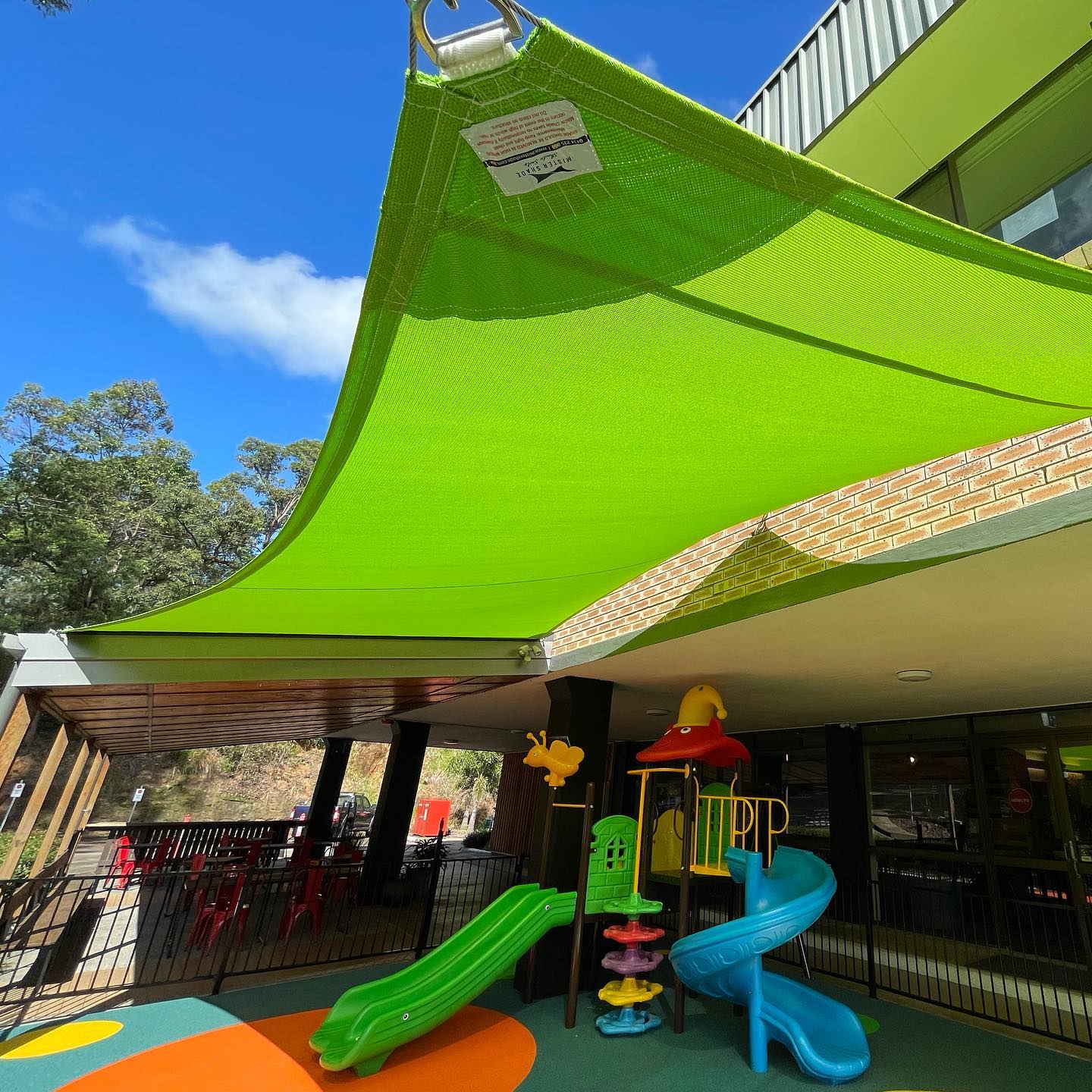
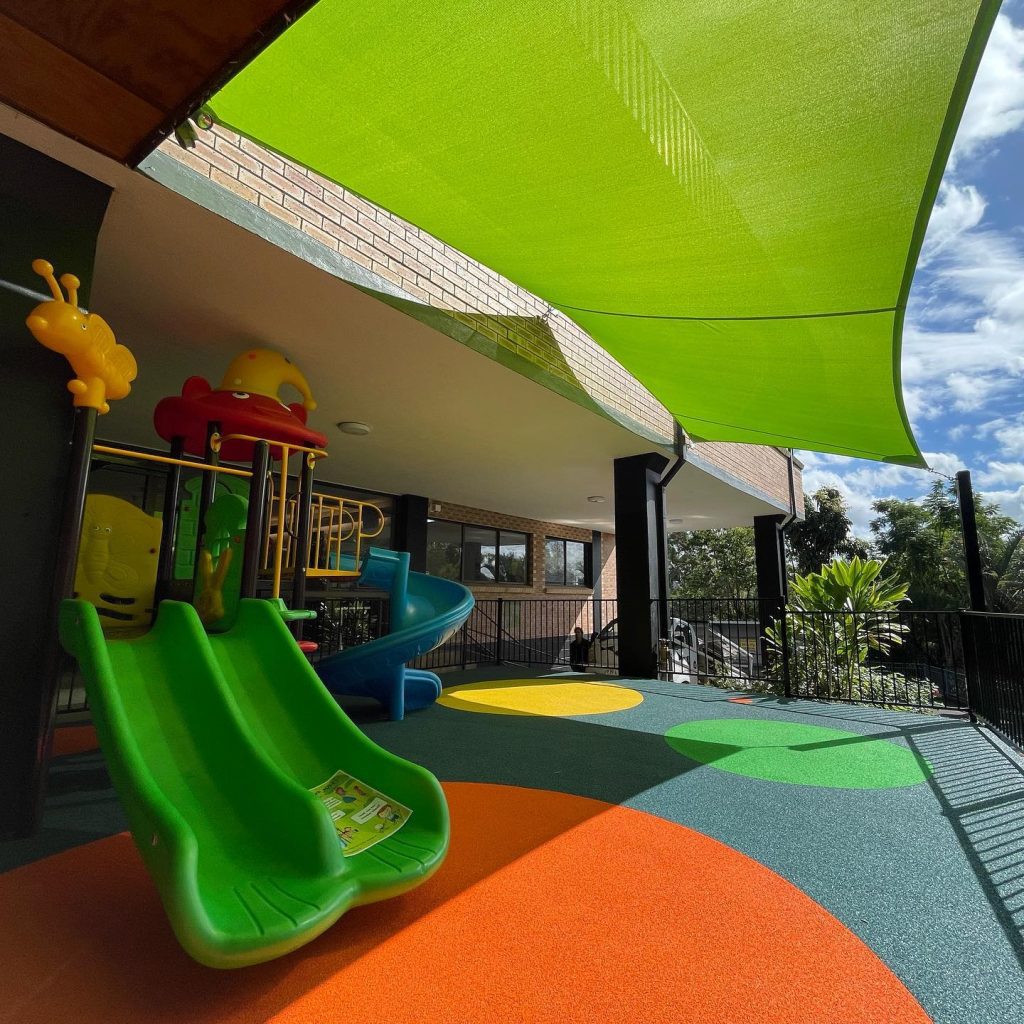
Shade sails are a popular choice for playgrounds and outdoor learning areas because they’re flexible in shape, relatively fast to install, and can be tensioned to cover irregular or awkward spaces. They work well over sandpits, cubby areas and smaller play zones.
Cantilever Shade Structures
Cantilever structures use a single, offset post so there’s no support pole intruding into the play space underneath. That makes them a strong option for equipment-heavy areas like playgrounds or ball courts where a centre post would get in the way.
Hip and Ridge Structures
Hip and ridge shade sails combine multiple high and low points to create a more architectural, tensioned canopy over larger or more complex areas. They tend to suit bigger outdoor spaces where a single sail won’t give even coverage.
Modular and Freestanding Shade Systems
Modular systems let you expand coverage over time, section by section, as budgets or enrolments grow. Freestanding options are useful where you can’t anchor to existing buildings or fence lines.
Shade Pergolas and Covered Walkways
Pergolas and covered walkways suit areas that need a more permanent, all-weather cover, such as connecting buildings or covering an entrance. If you’re weighing up a sail versus a pergola for a particular area, it’s worth reading our comparison of shade sails vs pergolas to see which suits your site better.
Key Features to Look for in a School or Childcare Shade Structure
The cheapest quote isn’t always the best value. Look past price and check these features first.
UV Protection Ratings and Fabric Specifications
Fabric UV protection is measured and rated, and it’s one of the most important specs for a children’s shade structure. Don’t assume all shade cloth is equal, ask your supplier for the specific rating of the fabric they’re quoting. Our guide to UV protection ratings for shade fabrics breaks down what the numbers actually mean and what to look for.
Wind and Weather Resistance
Educational shade structures need to handle wind loads over large spans, and they cop more use than a typical home installation. Ask about wind ratings for your specific location and structure size, particularly if you’re near the coast or on an exposed site. Our article on whether shade sails can withstand strong winds and extreme weather is a useful starting point.
Structural Integrity and Load Ratings
Posts, footings and fixings all need to be engineered for the size of structure and the site conditions, not just “big enough.” For schools and childcare centres, ask for engineering certification as standard, not an optional extra.
Colour, Aesthetics, and Design Flexibility
Shade structures don’t have to be purely functional. Colour choices can support branding, wayfinding (different colours for different play zones), or simply make a space more inviting. Our colour guide covers the options available if you want the structure to do double duty as a design feature.
Accessibility and Inclusive Design Considerations
Think about clearances for wheelchairs and prams, shade over accessible pathways, and even coverage that doesn’t create hard shadow lines that can be disorientating for some children. These details are easy to miss in an initial brief but matter a lot once the structure is built.
Compliance and Safety Standards
Getting compliance right upfront avoids costly rework later.
Relevant Australian Standards
Structural design, wind loading and fabric performance for shade structures are all governed by Australian Standards, and a reputable supplier should be able to tell you exactly which ones apply to your project and demonstrate how their design meets them.
Council and Planning Permit Requirements
Depending on the size of the structure, its location and your local council, you may need planning or building approval before installation. This is one of the most common causes of project delays, so it’s worth checking early. We’ve covered this in detail in do you need council approval for a shade sail in QLD and more broadly in do you need local council approval to install a shade sail in Australia.
Childcare Licensing and National Quality Framework Considerations
Childcare services are assessed against the National Quality Framework, which includes requirements around outdoor environments and safety. Shade provision often comes up as part of this assessment, so it pays to keep records of your shade structure’s compliance documentation, warranty and maintenance history. For a deeper look at sun safety obligations specific to playgrounds, see our article on childcare shade structures and meeting sun safety standards for QLD playgrounds.
Choosing the Right Size and Coverage for Your Space
Getting the size right is the difference between a structure that actually gets used and one that leaves gaps in shade during peak hours.
How to Assess Your Outdoor Area
Walk the space at different times of day and note where the sun falls in the morning, midday and afternoon. Look at existing pinch points too, gates, gathering spots, sandpits, that get heavy use and need reliable shade.
Calculating the Coverage Area You Need
Coverage needs to account for the sun’s movement across the day and across seasons, not just where the shadow falls at midday. This is exactly the kind of calculation a proper site assessment and design consultation should cover, rather than guessing from a floor plan.
Positioning for Maximum Shade and Usability
Structures should be positioned to shade the busiest zones during the hours children are actually outside, factoring in seasonal sun angles. A well-designed structure over the wrong spot is wasted money, so this step deserves as much attention as the fabric choice.
Materials and Fabric Options Explained
Material choice affects durability, UV protection and long-term cost far more than most buyers expect.
High-Density Polyethylene (HDPE) Shade Cloth
HDPE shade cloth is the standard choice for most shade sail applications thanks to its balance of UV protection, breathability and durability. Products like the Rainbow Shade Z16 are designed specifically for this kind of high-use, high-exposure application.
PVC-Coated Fabrics
PVC-coated fabrics are generally more waterproof than HDPE shade cloth, making them suited to structures where you want rain protection as well as sun protection, such as covered walkways.
Steel vs Aluminium Framing
Steel framing typically offers higher strength for larger spans, while aluminium is lighter and more corrosion-resistant, an important factor for coastal sites. Our guide on how to choose the best materials for your shade sails goes through the trade-offs in more depth, and if you’re on the coast, it’s worth reading how sails and fittings survive the salt air before locking in a spec.
Cost of Shade Structures for Schools and Childcare Centres
There’s no single number that applies to every project, because cost depends heavily on scale and site conditions.
Factors That Affect Pricing
Pricing is driven by:
- Size and shape of the structure (larger or more complex hip-and-ridge designs cost more than a simple single sail)
- Fabric and framing material specified
- Site conditions, including footings, ground type and access for installation equipment
- Engineering and certification requirements
- Council approval costs where applicable
For a general breakdown of what goes into shade sail pricing, see how much does a custom shade sail cost in Australia, and for commercial-specific considerations, our commercial shade structure costs and pricing breakdown and our guide to choosing a shade sail for a commercial property are worth a read before you budget.
Budget Planning and Funding Options
Some schools and childcare centres are able to access capital works funding or grants that cover outdoor infrastructure, including shade. Availability and eligibility vary by state, sector and funding round, so it’s worth checking directly with your relevant education department or local council for current programs rather than assuming what applied previously still does.
Cost vs Long-Term Value
A cheaper structure with a shorter lifespan or lower UV protection can end up costing more over time through earlier replacement, repairs, or simply not meeting your duty-of-care obligations. Weigh the quote against the warranty, fabric quality and expected lifespan, not just the upfront number.
Installation Process: What to Expect
Knowing the process upfront helps you plan around your school or centre’s calendar.
Site Assessment and Design Consultation
A proper installation starts with a site visit to assess ground conditions, existing structures, sun paths and any access constraints, followed by a design consultation to finalise shape, size and materials.
Council Approvals and Lead Times
If your project needs council or planning approval, factor in lead time for that before installation can begin. This is often the single biggest variable in project timelines, so raise it early with your supplier.
Installation Timeline and Minimising Disruption to Operations
Installation is generally scheduled to minimise disruption, for example during school holidays or outside of centre operating hours where possible. Ask your supplier how they plan to sequence work around children being on site, and whether the area needs to be closed off during construction.
Maintenance and Longevity
A shade structure is a long-term asset, and it needs a bit of upkeep to perform like one.
Routine Inspection and Cleaning Tips
Regular checks should cover fabric tension, signs of fraying or UV degradation, fixing hardware, and general cleanliness, since dirt and mould build-up can reduce fabric performance over time. Larger sites often benefit from a scheduled maintenance program rather than ad hoc checks. For a step-by-step approach, our shade structure maintenance checklist covers what to look for and how often.
Warranty Expectations and Lifespan
Ask your supplier what warranty applies to the fabric versus the frame, since these often differ, and what conditions could void it (for example, lack of regular cleaning or unauthorised repairs).
When to Repair vs Replace
Minor tears, loose fittings or fading can often be repaired, but once a fabric’s UV protection has degraded significantly or the structure has failed an inspection, replacement is usually the safer and more cost-effective option for a children’s facility.
How to Choose a Reputable Shade Structure Supplier
The supplier matters as much as the product. A good one will guide you through compliance, not just sell you fabric and poles.
Questions to Ask Before You Commit
- Can you provide engineering certification for this design?
- What UV rating and warranty does the fabric carry?
- Have you worked on school or childcare projects before?
- Who handles council approvals, us or you?
- What does your maintenance and repair service look like after installation?
What a Quality Quote Should Include
A thorough quote should itemise design, materials, fabric specification, engineering, installation and any council approval costs, rather than bundling everything into one vague figure. It should also specify warranty terms clearly.
Red Flags to Watch Out For
Be cautious of suppliers who can’t provide engineering certification, won’t commit to a UV rating in writing, or push generic, off-the-shelf sails for a custom site. Our article on 7 reasons to pick custom-made shade sails over generic explains why custom design matters more for commercial and educational sites than it might for a simple backyard job.
If you’re planning a shade project for a school or childcare centre on the Sunshine Coast, Brisbane or Gold Coast, it’s worth starting with a proper site assessment rather than a generic quote. Mister Shade’s shade sails service covers custom design, engineering and installation for commercial and educational sites, backed by durable, UV-rated fabrics built for high-use outdoor areas.
Frequently Asked Questions
What UPF rating should a shade structure for a childcare centre or school have?
Look for a fabric with a high, clearly stated UV protection rating and ask your supplier for written confirmation of the specific rating, rather than relying on general claims of ‘sun protection.’ The higher the rating, the more effectively it blocks harmful UV radiation.
Do shade sails for schools need council approval?
It depends on the size of the structure, its location and your local council’s rules, so it’s worth checking before you commit to a design. Our articles on council approval for shade sails in QLD and across Australia cover the general process.
How long does a shade structure last?
Lifespan depends on the fabric and frame quality, installation standard, and how well it’s maintained, so ask your supplier about expected lifespan and warranty terms for both the fabric and the structure separately.
Can existing shade sails at a school or childcare centre be repaired instead of replaced?
Minor issues like small tears or loose fittings can often be repaired, but if the fabric’s UV protection has degraded or the structure fails an inspection, replacement is usually the safer option for a children’s facility.