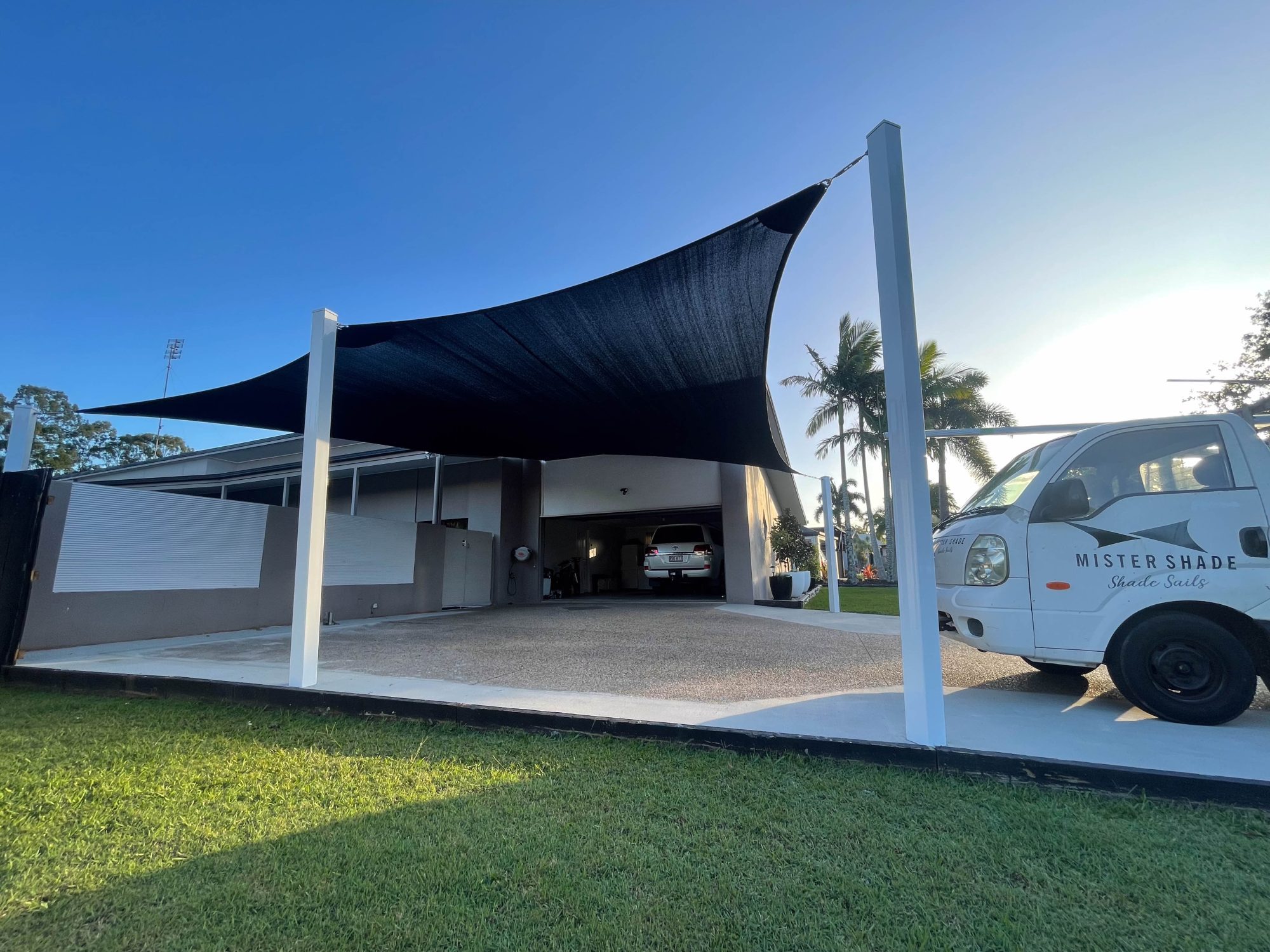
Yes, shade sails can absolutely survive salt air, but only if you choose the right fabric, hardware, and installation approach from the start. A standard inland shade sail dropped into a beachfront property on the Sunshine Coast will corrode, sag, and fail years before it should. The fix isn’t complicated: it comes down to marine-grade fittings, salt-resistant fabric, and posts anchored properly for sandy, wind-exposed ground.
Here’s what actually holds up on the coast, and what to avoid.
What Is a Coastal Shade Sail and Why Salt Air Matters
A coastal shade sail is built specifically to handle the conditions that come with living near the ocean: salt-laden air, higher wind loads, and near-constant UV exposure. It’s not just a regular sail installed near the beach. The materials and hardware are upgraded to cope with an environment that’s actively working to break them down.
How Salt Air Degrades Standard Outdoor Structures
Salt air carries fine airborne particles that settle on every exposed surface, including fabric, cabling, and metal fixings. Over time, this creates a few predictable problems:
- Salt crystals accelerate corrosion on untreated or low-grade metals
- Moisture trapped in salt residue speeds up rust, even on “stainless” steel
- UV exposure is often more intense near the coast due to reflected light off water and sand
- Wind carries salt further inland than most people expect, sometimes several kilometres
If you’re within a few hundred metres of the water, or even further with regular onshore winds, your shade sail is dealing with a harsher environment than a suburban backyard sail ever will.
Why Standard Shade Sails Fail Near the Ocean
Most off-the-shelf shade sails use 304-grade stainless steel hardware and basic shade cloth. That combination is fine inland, but near the ocean it’s a recipe for early failure. Rust spots appear on turnbuckles and D-shackles within a year or two, fabric can become brittle from constant salt and UV exposure, and stitching weakens faster than expected. The result is a sail that looks tired and unsafe well before its time.
Best Materials for Salt Air Resistance
The right materials are the single biggest factor in how long a coastal shade sail lasts. Get this right and everything else, wind rating, installation, maintenance, becomes far more effective.
Marine-Grade Stainless Steel Hardware (316 vs. 304)
This is the detail buyers most often overlook, and it matters more than the fabric choice. There are two common stainless steel grades used in shade sail hardware:
- 304 stainless steel: Fine for inland or low-exposure areas, but it corrodes noticeably faster once exposed to salt spray.
- 316 stainless steel: Contains added molybdenum, which significantly improves resistance to chloride (salt) corrosion. This is the standard for marine environments.
If you’re anywhere near the coast, insist on 316-grade marine-grade stainless steel hardware for turnbuckles, shackles, wire cable, and fixing plates. It costs more upfront but saves you from replacing corroded fittings every couple of years.
HDPE Shade Cloth vs. PVC/Vinyl Sails
Fabric choice depends on what you need the sail to do:
- HDPE (high-density polyethylene) shade cloth: Breathable, lets some airflow through, reduces wind loading on posts, and generally handles salt exposure well when it’s a quality knitted fabric with UV stabilisers built in.
- PVC/vinyl sails: Fully waterproof, good for rain protection, but they act like a solid sail in wind, meaning higher loads on posts and fixings. Coastal winds can push these harder than expected.
For most Sunshine Coast coastal homes, a high-quality HDPE fabric strikes the best balance of durability, breathability, and wind performance.
UV Stabilisers and Water-Repellent Coatings
Look for fabric with built-in UV stabilisers rather than a surface-level UV coating that wears off. Water-repellent finishes also help stop salt residue soaking into the fibres, which reduces long-term degradation. Our guide to understanding shade sail UV ratings breaks down what the ratings actually mean for durability, not just sun protection.
Key Features to Look for in a Coastal Shade Sail
Beyond fabric and hardware grade, a few design features make a real difference in coastal conditions.
Wind Load Ratings and Tension Design
Coastal properties see stronger, more consistent wind than sheltered inland yards. Your sail needs a wind load rating suited to that exposure, and it needs to be tensioned correctly so it doesn’t flap, which stresses stitching and fixings over time. Ask your installer for the specific wind rating of the fabric and hardware combination, not just the fabric alone. For a deeper look at how sails perform under pressure, see our article on whether shade sails can withstand strong winds and extreme weather.
Corrosion-Resistant Fixings, Turnbuckles, and Cables
Every metal component in the system, not just the obvious ones, needs to be corrosion-resistant. That includes:
- Turnbuckles and eye bolts
- Wire cable and swages
- D-shackles and fixing plates
- Bolts and washers at the post mounts
A single 304-grade component in an otherwise 316 system is still a weak point. Check the spec sheet or ask directly.
Breathable Fabric vs. Waterproof Fabric Trade-offs
Breathable HDPE reduces wind load but lets rain through. Waterproof PVC keeps you dry but increases wind stress on the whole structure. Some coastal properties use a combination, HDPE for the main sail and a smaller waterproof umbrella or awning for wet-weather cover. Our architectural umbrellas are a popular option for exactly this kind of flexible coastal setup.
Installation Considerations for Beachfront Properties
Good materials still fail if the installation doesn’t account for sandy soil and coastal wind loads.
Post Anchoring in Sandy or Unstable Soil
Sandy or loose coastal soil doesn’t hold a post the same way compact clay or loam does. Footings generally need to be deeper and wider than a standard inland install, often with a larger concrete base to compensate for reduced soil grip. In some cases, engineered footings or additional bracing are needed, particularly for larger sail spans.
Recommended Post Spacing and Height for Coastal Wind
Post spacing and height affect how much wind load the whole structure carries. Wider spans and taller posts increase leverage on the footings, which matters more in sandy ground. A professional installer will typically reduce span or increase post diameter for coastal sites compared to a sheltered suburban yard.
DIY Installation vs. Hiring a Professional
DIY is possible for small, low-stakes sails inland, but coastal installs are a different job. Between the soil conditions, wind load calculations, and the risk of a poorly anchored post becoming a hazard in a storm, this is one area where professional installation earns its cost. Our shade sail installation guide covers the general process, and it’s worth reading even if you’re hiring it out, so you know what to expect and what questions to ask.
Maintenance Tips to Extend Lifespan in Salt Air
Materials and installation get you a durable sail. Maintenance is what keeps it that way.
Rinsing and Cleaning Schedule
Coastal sails need more frequent attention than inland ones:
- Rinse fabric with fresh water every 4 to 6 weeks to remove salt build-up
- Do a proper clean with mild soap and a soft brush every 3 to 6 months
- Rinse hardware at the same time, salt loves to sit in the small gaps around fittings
Inspecting Hardware for Rust and Corrosion
Check turnbuckles, cables, and fixing points at least twice a year. Look for:
- Rust streaks running down the fabric from fixing points
- Stiffness or seizing in turnbuckles
- Pitting or discolouration on stainless fittings
Catching corrosion early means you can replace a single fitting instead of the whole system. Our shade sail maintenance and cleaning tips article has a full seasonal checklist.
Seasonal Takedown and Storage Advice
In cyclone season or ahead of severe storm warnings, taking the sail down (or releasing tension) reduces the risk of damage to the fabric and the posts. If your sail has a quick-release mechanism, this is quick to do and worth building into your storm-season routine.
Cost of Coastal-Grade Shade Sails
Coastal-grade upgrades add to the price, but they pay for themselves in avoided repairs.
Material and Hardware Upgrades Cost Breakdown
Expect to pay more for:
- 316-grade stainless hardware over 304-grade
- Marine-rated fabric with reinforced stitching and UV stabilisers
- Larger or engineered footings for sandy soil
The exact premium varies by project size, but coastal-grade components typically add a noticeable percentage to the base cost compared to a standard suburban install. Our guide on custom shade sail costs in Australia walks through the standard pricing factors, which you can then adjust upward for coastal upgrades.
Professional Installation Pricing
Installation costs for coastal properties tend to run higher than inland jobs, mainly due to the extra footing work and engineering considerations. It’s still worth it. A sail that needs replacing in three years because of corrosion or a failed footing costs more in the long run than paying properly for it once.
Top Shade Sail Shapes and Configurations for Coastal Yards
Shape affects how well a sail handles coastal wind, not just how it looks.
Triangle vs. Square vs. Multi-Sail Layouts
- Triangles: Simple, strong, and good at shedding wind load through a single high-tension point. A solid choice for smaller, exposed areas.
- Squares/rectangles: Cover more ground but need careful tensioning to avoid flapping in gusty coastal wind.
- Multi-sail layouts: Several overlapping sails at different heights and angles, which can break up wind load more effectively than one large single sail.
If you’re weighing up sails against other structures for your specific site, our outdoor shade structure comparison is a useful next read.
Best Configurations for Wind Deflection
Angling sails so wind spills off the edge rather than catching underneath reduces stress on the whole system. A good installer will assess your prevailing wind direction, usually onshore in coastal Sunshine Coast properties, and design the pitch and orientation around it rather than using a flat, symmetrical layout by default.
Getting It Right the First Time
Coastal conditions are unforgiving on shortcuts. The combination of 316-grade hardware, quality UV-stabilised fabric, and footings designed for sandy soil is what separates a sail that lasts 10-plus years from one that needs replacing after three. If you’re planning a shade sail for a Sunshine Coast beachfront or near-coastal property, it’s worth requesting a custom shade sail quote so the design accounts for your exact site conditions from day one, rather than retrofitting fixes later.
Frequently Asked Questions
What is the disadvantage of a shade sail?
Shade sails don’t offer full waterproof coverage like a solid roof structure, and they need periodic re-tensioning, cleaning, and hardware checks, especially in coastal areas where salt speeds up wear on fabric and fittings.
Do you need council approval for a shade sail in QLD?
It depends on the size, height, and location of the sail, smaller residential sails are often exempt, but larger structures or those near boundaries may need approval. Check our detailed breakdown on council approval for shade sails in QLD for the specific thresholds.
What is the best shade sail for windy areas?
A breathable HDPE shade cloth with 316-grade marine stainless steel hardware and correctly tensioned, engineered footings handles high wind far better than waterproof PVC sails, which catch more wind load.
Is a lighter or darker shade sail better?
Lighter colours reflect more heat and stay cooler to the touch, while darker colours generally offer stronger UV blockout, so the best choice depends on whether you’re prioritising heat reduction or maximum sun protection.