Guests remember whether they could sit outside without frying. Good shade for your holiday rental means happier reviews, fewer complaints about the “harsh sun on the deck,” and outdoor furniture that doesn’t fade after one summer. On the Sunshine Coast, where UV levels sit among the highest in the country most of the year, shade isn’t a nice extra. It’s part of what makes a listing bookable.
This guide walks through the shade options worth considering for a holiday rental or Airbnb, what they cost, and how to pick the right one for your property.
Why Shade Matters for Holiday Rentals
A shaded outdoor space gets used. An exposed one doesn’t. That’s the simple economics of it.
Improving Guest Comfort and Satisfaction
Guests booking a Sunshine Coast rental expect to spend time outdoors, whether that’s by the pool, on the deck, or around an outdoor dining setting. Without shade, that space is only usable for a few hours in the early morning or evening. With it, guests can use the outdoor area all day, which is often the whole point of the booking.
Protecting Outdoor Furniture and Decking
UV exposure fades cushions, cracks timber decking, and dries out synthetic wicker within a couple of seasons. Shade extends the life of everything sitting underneath it, which means fewer replacement costs between tenancies. This matters more for rentals than owner-occupied homes, because furniture takes a beating from constant turnover of guests who aren’t as careful with your gear as you’d be.
Boosting Reviews, Bookings, and Photos
Listing photos with a shaded, styled outdoor area is better than a bare, sun-blasted courtyard. Guests searching in summer specifically filter for “shaded outdoor area” or “covered patio” in reviews and search fields. A well-shaded space also tends to get mentioned positively in reviews, which feeds directly into your ranking on booking platforms. If you’re also working on how to increase your holiday rental bookings, shade is one of the cheaper upgrades with an outsized effect on guest satisfaction scores.
Types of Shade Solutions for Holiday Rentals
Each option suits different properties, budgets, and levels of permanence. Here’s how they stack up.
Shade Sails
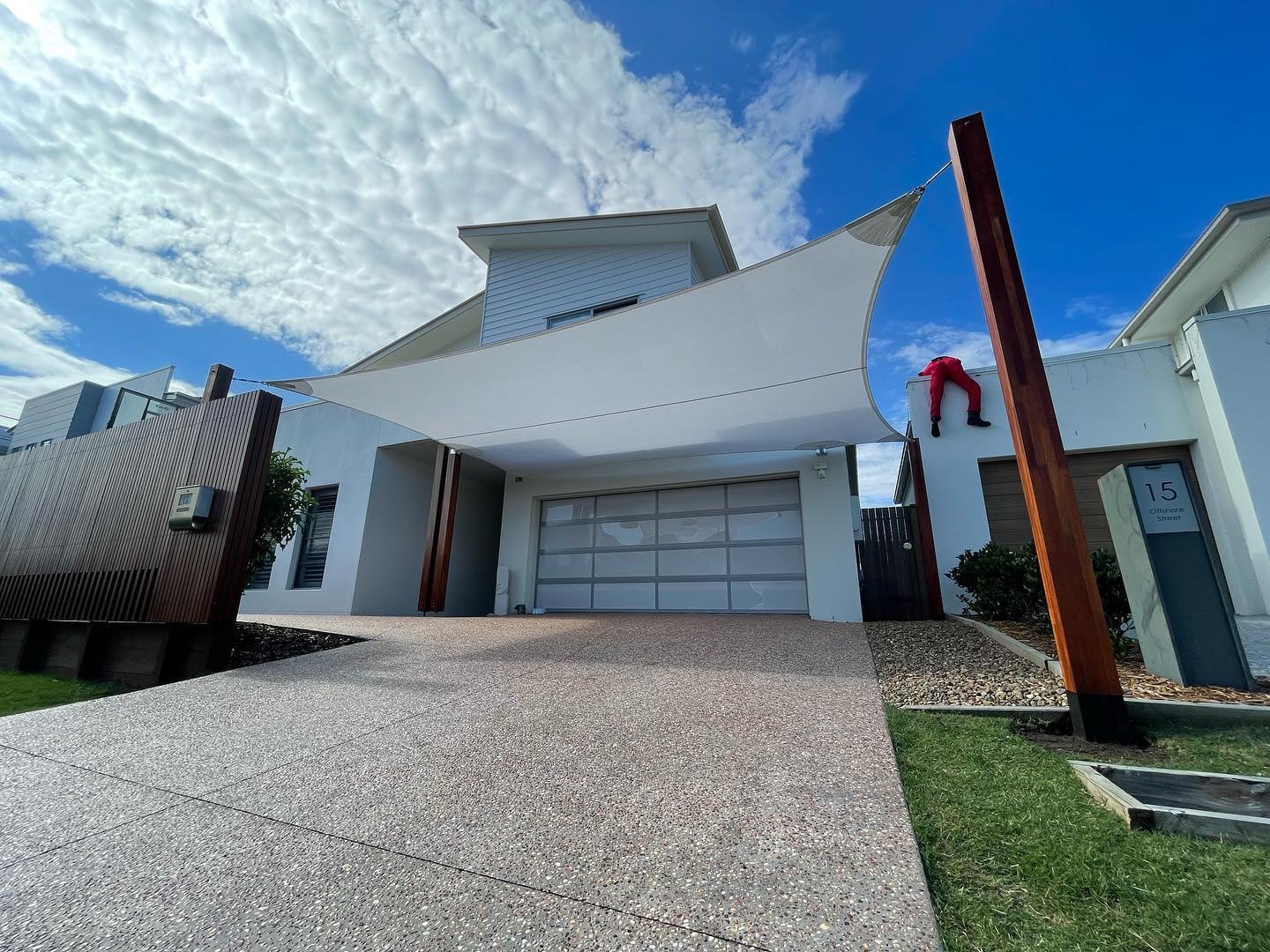
Shade sails are the most popular choice for Sunshine Coast rentals, and for good reason. They’re custom-shaped to fit awkward pool areas, decks, or driveways, they handle strong coastal winds when installed properly, and UV-rated fabric blocks up to 99% of UV rays. They’re also relatively low-maintenance and can be designed to match the property’s colour scheme using Mister Shade’s colour range.
If you’re weighing sails against other structures, our comparison on shade sails vs pergolas breaks down the pros and cons of each for Australian homes.
Umbrellas and Parasols
Good for smaller courtyards, balconies, or a single outdoor table. Freestanding or cantilevered umbrellas offer flexibility since they can be repositioned or folded down, but they’re less durable in high wind and need to be closed when guests leave or bad weather rolls in. Commercial-grade architectural umbrellas are sturdier than the retail versions and hold up far better to repeated guest use.
Pergolas and Gazebos
A permanent structure that adds real value to the property and works year-round, rain or shine, particularly with an enclosed or louvred roof. The trade-off is upfront cost and, in some cases, council approval. They suit rentals where you’re investing in a longer-term outdoor entertaining upgrade rather than a quick shade fix.
Retractable Awnings
Attached to the building, awnings extend over a deck or window and retract when not needed. They’re a solid option where you want shade close to the house without a standalone structure eating into yard space. See our awnings page for residential and commercial options.
Natural Shade (Trees, Pergola Plants, Trellises)
Free once established, but slow to grow and not something you can control for a rental you want shaded this season. Vines on a trellis or pergola can supplement other shade structures nicely over time, though they’re not a standalone solution for a property you need guest-ready now.
How to Choose the Right Shade for Your Property
The right choice depends on your climate exposure, budget, and how the property looks and feels.
Climate and Sun Exposure Considerations
North and west-facing outdoor areas cop the harshest afternoon sun on the Sunshine Coast. Check which direction your outdoor space faces before choosing a shade type. Areas exposed to strong coastal winds need a structure rated for it. Our article on whether shade sails can withstand strong winds and extreme weather is worth a read if your property is exposed or near the coast.
Budget and Maintenance Requirements
Umbrellas are the cheapest entry point, sails sit in the middle, and pergolas are the biggest investment. Factor in ongoing costs too. Sails need occasional cleaning and re-tensioning, pergolas need very little upkeep once built, and awnings have moving parts that eventually need servicing.
Property Style and Aesthetic Fit
Shade should complement the property, not clash with it. A crisp white sail suits a coastal-style home, while a timber-look pergola might suit a more traditional Queenslander. Custom shade sails give you the most flexibility here since colour, shape, and fabric can all be tailored to match.
Local Regulations and HOA/Council Rules
Some shade structures need council approval depending on size, height, and whether they’re permanent. Before committing, check our guides on council approval for shade sails in QLD and local council approval for shade sails in Australia generally. If your rental is in a body corporate or estate with design guidelines, check those rules too before installing anything permanent.
Cost Breakdown of Popular Shade Options
Costs vary widely depending on size, fabric, and whether you’re installing yourself or hiring a professional.
DIY vs Professional Installation
A basic umbrella is the easiest DIY option. Shade sails and pergolas generally need professional installation to get tensioning, post footings, and structural fixings right, especially in wind-exposed coastal areas. Getting this wrong on a rental property is a bigger risk than on a private home, since a failed installation affects guests and your reviews, not just you.
Average Price Ranges by Shade Type
- Market umbrella: a few hundred dollars for a decent quality one, more for commercial-grade
- Shade sail: varies significantly based on size and fabric, see our detailed shade sail cost guide for a realistic breakdown
- Retractable awning: mid to higher range depending on size and motorisation
- Pergola: the largest investment, but adds the most long-term property value
For an accurate quote on your specific property, it’s worth getting a custom measure rather than relying on generic online estimates, since pool areas, decks, and driveways all have different structural requirements.
Best Materials for Durability in Rental Properties
Rental properties take more wear than owner-occupied homes, so material choice matters even more.
UV-Resistant Fabrics
Look for fabric with a high UV rating, not just any shade cloth. Our guide to understanding shade sail UV ratings explains what to check before you buy. Fabrics like Rainbow Shade Z16 are built for exactly this kind of high-exposure, long-term use.
Weatherproof and Low-Maintenance Options
Choose fabrics and hardware rated for coastal conditions, since salt air corrodes cheap fittings quickly. Marine-grade stainless steel fixings and commercial-weight fabric cost more upfront but last significantly longer between guest turnovers, which matters when you’re not on-site to notice small problems early. See our guide on choosing the best materials for shade sails for more detail.
Shade Ideas for Small Patios, Balconies, and Pools
Small spaces still deserve proper shade, just scaled to fit.
Compact and Portable Shade Solutions
- Cantilever umbrellas that don’t need a centre pole taking up deck space
- Small triangular shade sails angled over a single seating area
- Retractable awnings for balconies where floor space is at a premium
Poolside Shade Safety Tips
- Keep shade structures clear of pool fencing lines to meet safety requirements
- Avoid trip hazards from umbrella bases or sail anchor points near pool edges
- Choose fade and chlorine-resistant fabric for shade near a pool, since chemicals and reflected UV both accelerate wear
If pool safety compliance is on your radar too, it’s worth reviewing broader pool safety tips for vacation rentals alongside your shade planning, since fencing and shade requirements often intersect.
Maintenance Tips to Keep Shade Structures Looking Great
A shade structure that looks tired drags the whole listing down with it.
Cleaning and Storage Between Guests
- Hose down sails and umbrella canopies regularly to remove salt, dust, and bird droppings
- Check tension on shade sails every few months, since fabric can loosen over time
- Fold and store portable umbrellas during severe weather warnings
Seasonal Care and Repairs
Inspect fixings, stitching, and posts each season for wear, especially after storm season. Small repairs, like a loose fitting or a fraying seam, are cheap to fix early and expensive to ignore. If you notice sagging, mould, or fabric damage, get it looked at before your next guest arrives rather than after a bad review mentions it. Mister Shade offers shade maintenance and repairs for exactly this kind of upkeep.
Getting Shade Right Pays Off
Shade isn’t just about comfort on a hot day. It’s furniture protection, better photos, higher guest satisfaction, and fewer maintenance headaches between bookings. For most Sunshine Coast holiday rentals, a well-designed custom shade sail strikes the best balance of cost, durability, and visual appeal, though umbrellas, awnings, and pergolas all have their place depending on your space and budget.
If you’re planning outdoor upgrades more broadly, pairing shade with new outdoor furniture for holiday rentals and a look at your holiday rental maintenance checklist will get the whole outdoor area guest-ready at once.
Get in touch with Mister Shade for a custom measure and quote tailored to your rental property.
Frequently Asked Questions
What is the best portable sunshade for a beach trip?
A lightweight pop-up beach tent or a portable sun shelter with UPF-rated fabric is ideal, since it sets up quickly and packs down small. Look for one with sand pegs or anchor bags to handle coastal wind.
What are some good patio shade ideas for renters?
Freestanding umbrellas, tension shade sails on portable frames, or retractable side awnings work well since they don’t require permanent fixing into someone else’s property. Always check with the landlord before drilling into decking or walls.
Do I need a permit for shade cloth?
It depends on the size, height, and permanence of the structure, plus your local council’s rules. Smaller, temporary shade cloth setups often don’t need approval, but larger or fixed structures may, so it’s worth checking with your local council first.
What is the cheapest way to shade an area?
A market umbrella or basic shade cloth stretched between fixed points is usually the cheapest option upfront. Keep in mind cheaper materials often fade or wear out faster, so it can cost more in replacements over time than a slightly higher quality option.