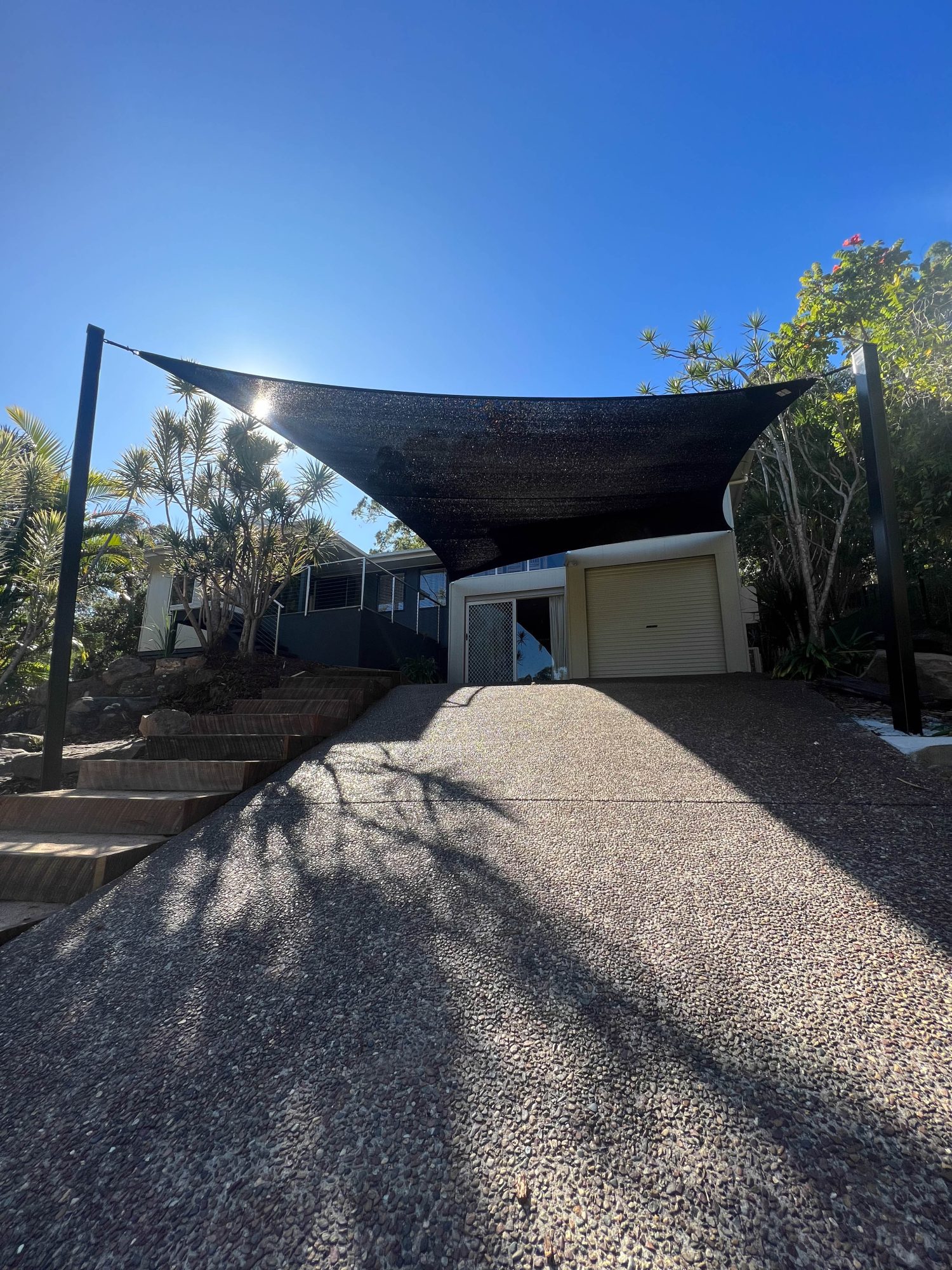
Most shade sails last between 5 and 15 years, depending on the fabric and how much Sunshine Coast sun and wind they’ve copped. If yours is sagging, fading badly, torn, or the hardware’s rusted through, it’s time to replace it rather than patch it up again.
That’s the short answer. Here’s how to work out exactly where your sail sits, and what to do about it.
What Is a Shade Sail and How Long Should It Last?
A shade sail is a tensioned fabric structure anchored between posts, walls, or existing buildings to block UV rays and rain over patios, pools, driveways, and play areas. Unlike a fixed roof, it relies on tension and fabric strength to do its job, which means it wears differently to a solid structure.
Average Lifespan by Material
- HDPE (knitted shade cloth): 7 to 12 years with good UV stabilisers, though breathable HDPE won’t keep out rain.
- PVC (waterproof): 10 to 15 years, tougher against weather but heavier and pricier.
- Solution-dyed polyester: 10 to 15 years, excellent colour retention and a good middle ground for waterproofing and durability.
If you’re weighing these up for a new sail, our guide on how to choose the best materials for your shade sails breaks down the trade-offs in more detail.
Factors That Affect Longevity
A few things shorten (or extend) that lifespan more than the material itself:
- Sun exposure. North-facing sails cop harsher, more constant UV than shaded or southern positions.
- Coastal salt air. Salt accelerates hardware corrosion and fabric breakdown, a big factor anywhere near the Sunshine Coast coastline.
- Installation quality. A poorly tensioned sail flogs itself apart in strong wind, while a correctly installed one distributes load evenly.
- Wind exposure. Open, unobstructed sites see more flex and strain on seams and stitching.
9 Signs It’s Time to Replace Your Shade Sail
If you’re ticking off more than two or three of these, replacement is probably cheaper than another repair.
1. Fading, Discolouration, or UV Degradation
Some fading is normal and doesn’t always mean the UV protection is gone. But if the fabric has gone patchy, chalky, or noticeably thinner in colour, the UV inhibitors have likely broken down and the sail is no longer blocking rays the way it should.
2. Rips, Tears, or Fraying Edges
Small tears near seams can sometimes be patched. But multiple tears, or fraying along the perimeter cable, mean the fabric’s structural integrity is compromised and a repair is just delaying the inevitable.
3. Sagging or Loss of Tension
A well-installed sail should stay taut. If yours is pooling water, flapping in light wind, or you’ve re-tensioned it repeatedly with no lasting fix, the fabric has likely stretched beyond its usable life.
4. Mould, Mildew, or Persistent Odours
Dark spots or a musty smell that won’t clean out have usually worked into the fabric fibres. At that point, cleaning won’t fully restore it, and it’s a sign moisture is getting trapped, which weakens the material further.
5. Weakened or Corroded Hardware and D-Rings
Hardware is easy to overlook but it carries the entire load of the sail. Rusted turnbuckles, stretched or cracked D-rings, and frayed wire cables are a safety issue, not just cosmetic wear. If the hardware fails in a storm, the whole sail comes down.
6. Reduced Sun/Rain Protection
If you’re noticing more sunburn underneath the sail, or rain is getting through a waterproof fabric, the coating or weave has broken down even if the sail still looks intact from a distance.
7. Visible Thinning or Brittle Fabric
Hold a section up to the light. If you can see through it more than you used to, or it feels stiff and crackly rather than pliable, the fibres have degraded and it’s more prone to sudden tearing.
8. Repeated Repairs Costing More Than Replacement
One repair a year is normal maintenance. Two or three repairs in twelve months, especially on an older sail, usually means you’re spending money to delay a replacement you’ll need anyway.
9. Storm or Wind Damage
Sunshine Coast storm season is hard on shade sails. If a sail has been overstretched, ripped from an anchor point, or hit by debris, get it assessed straight away. Our article on whether shade sails can withstand strong winds and extreme weather covers what a well-built sail should handle, and what’s a red flag.
Repair vs Replace: How to Decide
When a Repair Makes Sense
Repair is worth it when the sail is under 5 years old, the fabric is otherwise in good condition, and the damage is isolated, a single small tear, one worn stitch line, or a loose D-ring.
When Replacement Is the Smarter Investment
Replace when the fabric is faded and brittle, damage is spread across multiple areas, hardware is corroded, or the sail is already past its expected lifespan for its material type.
Cost Comparison: Repair vs New Sail
A single seam repair or re-tensioning job is usually a fraction of the cost of a new custom sail. But once you’re paying for hardware replacement plus fabric patching plus a call-out, you’re often 40 to 60% of the way to a new sail’s cost, without the fresh UV protection or warranty. For a clearer idea of what a new sail runs, see our breakdown of how much a custom shade sail costs in Australia.
How to Inspect Your Shade Sail (Step-by-Step Checklist)
Do this twice a year, ideally before summer and before storm season:
- Check tension. Push gently on the fabric. It should feel firm, not loose or bouncy.
- Inspect seams and stitching for fraying, gaps, or loose thread.
- Look for pooling. Water sitting on the sail after rain means tension or pitch is off.
- Check hardware. Look for rust, stretched D-rings, and worn turnbuckles or cables.
- Hold fabric up to light to check for thinning.
- Smell for mould or mildew in shaded, damp corners.
- Check posts and anchor points for movement, cracking, or lean.
- Note fading compared to a photo from a year or two ago, if you have one.
- Test UV protection by comparing sun exposure underneath to a few years back.
How to Extend the Life of a New Shade Sail
Proper Tensioning and Installation
Most premature failures come down to poor installation, not bad luck. Correct angles, adequate fall for water runoff, and properly rated anchor points all matter more than people expect. If you’re installing yourself or briefing a contractor, our guide on how to properly install a shade sail is a useful starting point, and it’s worth checking whether council approval applies in QLD before you commit to posts and anchor points.
Seasonal Cleaning and Storage Tips
- Hose down twice a year to remove salt, dust, and bird droppings.
- Use a soft brush and mild detergent, never bleach or harsh chemicals.
- Loosen tension slightly before major storms if the sail is removable.
- Check and tighten hardware every six months.
Our full shade sail cleaning and maintenance tips go into more detail on keeping fabric in good condition year-round.
Choosing UV-Resistant, High-Quality Fabric
Not all shade cloth is rated equally. Look for a high UPF rating and check the fabric’s UV stabiliser content, not just the advertised block-out percentage. Our guide to understanding shade sail UV ratings explains what the numbers actually mean for sun protection.
Choosing a Replacement Shade Sail
Fabric Types and Durability Ratings
Match the fabric to the job. HDPE suits sun-only areas like driveways and play spaces. PVC or solution-dyed polyester suits pool areas, alfresco dining, or anywhere you want rain protection too. Fabrics like our Rainbow Shade Z16 are built specifically for Australian UV and weather conditions.
Sizing, Shape, and Anchor Point Considerations
Custom sails outperform off-the-shelf options because they’re shaped to your actual anchor points, not the other way around. Odd-shaped patios or pools often need a multi-point sail rather than a simple square. Our piece on best shade sail designs for home patios has some real examples worth comparing to your own space.
DIY Installation vs Hiring a Professional
DIY can work for small, simple sails. But incorrect tension or under-rated anchor points are the top cause of early failure. For anything over a modest size, or anywhere wind exposure is a factor, a professional install protects your investment and usually your warranty too.
If your current sail is ticking boxes on the warning list above, it’s worth getting ahead of the problem before storm season rather than after. You can shop our full range of shade sails or get a custom shade sail quote to compare what a properly fitted, UV-rated replacement would cost for your space.
Frequently Asked Questions
How often should shade sails be replaced?
Most shade sails need replacing every 7 to 15 years depending on the fabric, with HDPE typically at the shorter end and PVC or solution-dyed polyester lasting longer if properly maintained.
Can a faded shade sail be restored?
Light surface fading can sometimes be improved with a proper clean, but once the UV stabilisers have broken down and the fabric looks chalky or thin, restoration won’t bring back its original sun protection.
Is it worth repairing a torn shade sail?
A single small, isolated tear on a sail under about 5 years old is usually worth repairing, but multiple tears or damage on an older sail often costs more to fix than to replace.
What’s the average cost to replace a shade sail?
Costs vary widely based on size, fabric, and shape, but a custom sail typically costs more upfront than a generic one while lasting longer and fitting your space properly, so it’s worth getting a tailored quote.