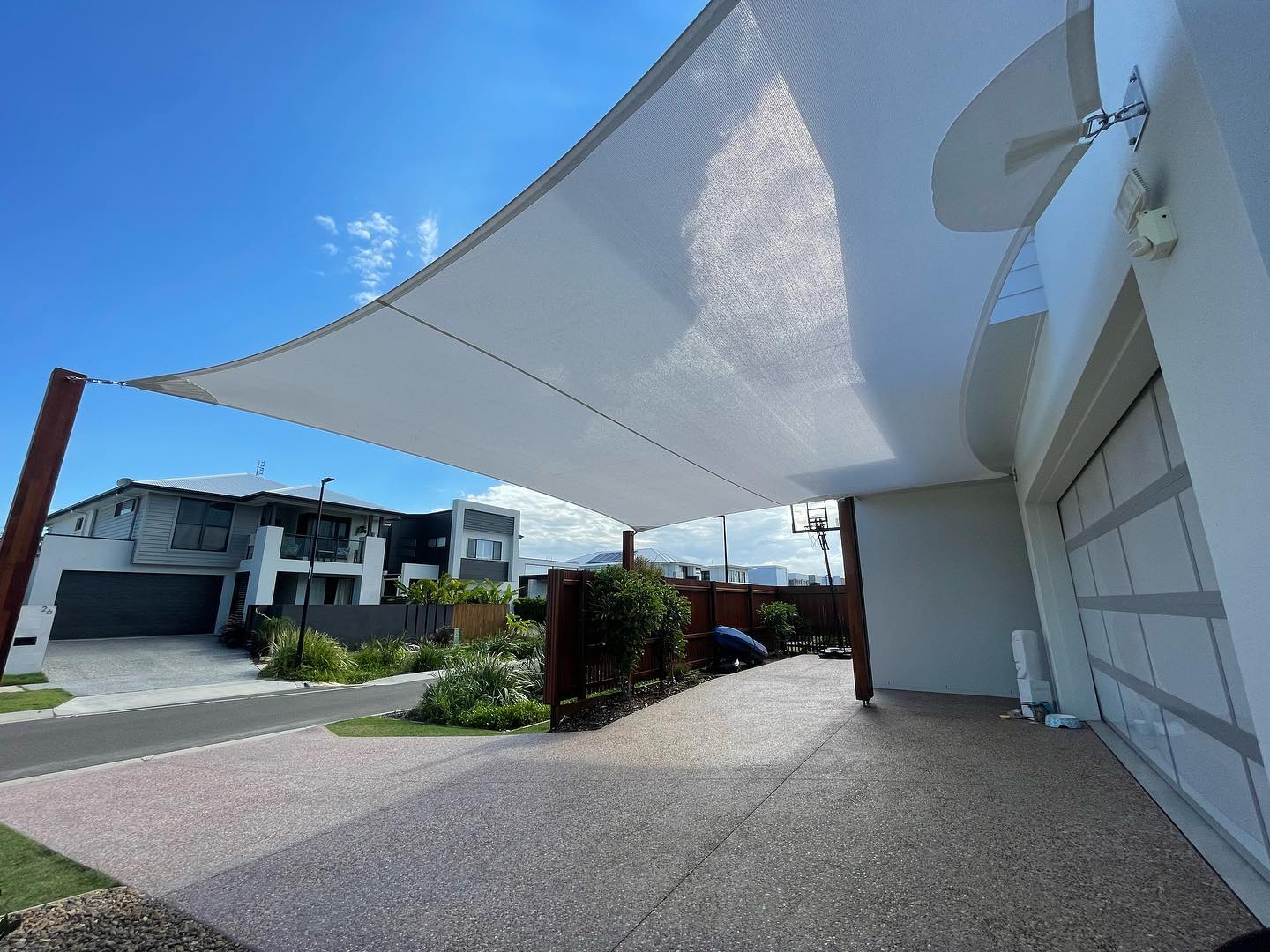
A shade sail’s UV protection rating tells you exactly how much harmful ultraviolet radiation the fabric blocks, and choosing the wrong rating can leave your family dangerously exposed, even while sitting in the shade. Here’s everything you need to know to make a confident, informed purchase.
What Is a UV Protection Rating for Shade Sails?
A UV protection rating is a standardised measure of how effectively a shade sail fabric reduces UV radiation reaching the skin. You’ll see it expressed in two ways: as a UPF number or as a UV blockage percentage. Both describe the same thing from slightly different angles.
UPF vs. UV Blockage Percentage, What’s the Difference?
UPF (Ultraviolet Protection Factor) works like SPF on sunscreen, but for fabrics. A UPF 50 fabric allows only 1/50th of UV radiation to pass through, that’s a 98% blockage rate. A UPF 15 fabric blocks around 93% of UV.
UV blockage percentage is simply the direct expression of that same measurement. Manufacturers sometimes list “95% UV blockage” on spec sheets rather than a UPF number. Both figures are valid; just convert mentally: 95% blockage = UPF 20.
The key takeaway: always check which UV wavelengths are being measured. A quality rating covers both UVA and UVB, not just one band.
How Shade Sail UV Ratings Are Tested and Certified
Reputable shade sail fabrics are tested against AS/NZS 4399, the Australian and New Zealand standard for sun-protective fabrics. This standard uses a spectrophotometer to measure how much UV passes through the fabric across the full UV spectrum. Look for this standard explicitly listed on the product spec sheet, not just a vague “UV resistant” claim.
Understanding the UPF Scale
The UPF scale is broken into three protection categories. Knowing which bracket suits your situation saves you from overspending or under-protecting.
UPF 15–24 (Good): When Is It Enough?
A UPF 15–24 rating blocks roughly 93–96% of UV radiation. This is the minimum threshold for a fabric to be classified as sun-protective. It might be acceptable for a shaded garden seating area used briefly in the morning or evening, but it’s not recommended for prolonged sun exposure, children, or high UV index regions like Queensland.
UPF 25–39 (Very Good): The Mid-Range Explained
Fabrics rated UPF 25–39 block 96–97.5% of UV. These are a solid choice for most residential applications, backyard entertaining areas, pergola covers, and garden shade where adults spend moderate time outdoors. They typically offer a good balance of UV protection and airflow.
UPF 40–50+ (Excellent): Maximum Protection for Families and Hot Climates
UPF 40–50+ fabrics block 97.5–99%+ of UV radiation. This is the rating to prioritise for:
- Children’s play areas and sandpits
- Pool surrounds and outdoor dining areas used at peak UV hours (10am–3pm)
- Commercial settings like childcare centres, schools, and cafes
- Anyone with fair skin, a history of skin cancer, or photosensitivity
In Australia’s high UV environment, especially on the Sunshine Coast, UPF 50+ is widely considered the benchmark worth investing in.
Key Factors That Affect a Shade Sail’s UV Rating
The UPF number on the label is the starting point, not the whole story. Several physical factors determine how that rating translates to real-world protection.
Fabric Weave Density and Porosity
Tighter weaves with smaller gaps between fibres block more UV. High-density HDPE fabrics like Rainbow Shade Z16 are engineered specifically to achieve UPF 50+ while still allowing air to circulate, a combination that cheaper, loosely woven fabrics can’t reliably deliver.
The trade-off is real: a denser weave does reduce airflow slightly. But modern quality fabrics have largely closed this gap, offering excellent UV blockage without turning your outdoor space into a heat trap.
Fabric Color and Dye Composition
Darker colours generally absorb more UV radiation and therefore block more UV than lighter shades. A deep charcoal or navy fabric will typically outperform a white or cream fabric of the same weave density. That said, the difference between a high-quality light-coloured fabric and a dark one is often marginal when both carry a UPF 50+ rating, the dye and fibre composition matter as much as the colour.
If you’re choosing purely for UV protection and aren’t concerned about heat reflection, darker tones have a slight edge. For a full breakdown of how colour choices interact with shade performance, the Mister Shade Colour Guide is worth reading before you decide.
Fabric Material: HDPE vs. PVC-Coated vs. Canvas
| Fabric Type | Typical UPF | Airflow | Lifespan |
|---|---|---|---|
| HDPE (knitted) | 50+ | Good | 10–15 years |
| PVC-coated polyester | 50+ | Low (solid) | 15–20 years |
| Canvas (woven cotton/poly) | 15–30 | Moderate | 5–10 years |
HDPE is the most popular choice for shade sails, it’s lightweight, UV-stabilised, and purpose-built for outdoor use. PVC-coated fabrics offer maximum blockage but trap heat underneath, making them better suited to commercial structures where waterproofing matters more than ventilation. Canvas is the weakest performer for UV and degrades faster under sustained sun exposure.
For a deeper comparison, How to Choose the Best Materials for Your Shade Sails covers each option in detail.
How Installation Angle and Overlap Affect Real-World UV Exposure
Here’s something most product listings won’t tell you: even a UPF 50+ sail can allow significant UV exposure at the edges and through gaps if it’s installed incorrectly. UV radiation travels at angles, not just straight down. A sail pitched too flat, or with large uncovered gaps on the sides, lets low-angle UV rays reach occupants underneath.
Practical steps to close these gaps:
- Pitch the sail at an angle (ideally 20–30 degrees) to shed water and reduce low-angle UV entry
- Overlap multiple sails by at least 300mm where joins occur
- Position the sail to cover the full area where people actually sit, not just overhead
What UV Protection Rating Do You Actually Need?
The right rating depends on who’s using the space and for how long.
Shade Sails for Children’s Play Areas
Children’s skin is more vulnerable to UV damage, and cumulative sun exposure in childhood is strongly linked to skin cancer risk in later life. For any shade sail covering a playground, sandpit, or childcare outdoor area, UPF 50+ is non-negotiable. Queensland’s sun safety guidelines for childcare and school settings reinforce this standard. Our article on childcare shade structures and QLD sun safety standards covers the compliance requirements in full.
Shade Sails for Pools and Outdoor Entertaining
Pool surrounds and alfresco dining areas are used for extended periods during peak UV hours. UPF 50+ is the smart choice here too. The added bonus: high-density fabrics reduce glare off the water and keep the area noticeably cooler.
Commercial vs. Residential Use Cases
Commercial operators, cafes, schools, sporting clubs, face both a duty of care and higher foot traffic, making UPF 50+ the standard. For residential use where the sail covers a low-traffic garden path or shades a garage wall, a UPF 25–39 fabric may be sufficient. But if in doubt, step up. The price difference between mid-range and UPF 50+ fabrics is modest compared to the long-term health benefit.
How to Read a Shade Sail’s UV Rating Label or Spec Sheet
Certifications to Look For
When reviewing a product’s spec sheet, check for:
- AS/NZS 4399, the Australian/NZ standard for UV-protective fabrics. This is the gold standard for local buyers.
- OEKO-TEX Standard 100, confirms the fabric is free from harmful chemicals (relevant for children’s areas).
- UV blockage percentage tested across both UVA and UVB, not just one wavelength.
- Independent laboratory testing, not just the manufacturer’s own assessment.
Red Flags: Vague or Unverified UV Claims
Be cautious of:
- Labels that say “UV resistant” without specifying a UPF rating or blockage percentage
- Products with no reference to AS/NZS 4399 or any independent standard
- Retailers who can’t provide a spec sheet or test report on request
- Unusually low prices on “UPF 50+” products, quality UV-stabilised HDPE has a cost floor
If a supplier can’t back up their UV claims with documentation, walk away.
Does UV Protection Degrade Over Time?
Yes, and this is one of the most overlooked aspects of shade sail ownership. UV protection does degrade, but how quickly depends on fabric quality, climate, and care.
How Sun Exposure, Washing, and Weathering Reduce UPF
UV radiation itself breaks down the fibres and UV-stabilising additives in shade fabrics over time. Studies on textile UPF degradation show that cheaper fabrics can lose a significant portion of their UV protection within 2–3 years of continuous outdoor exposure. High-quality HDPE fabrics with built-in UV stabilisers are engineered to resist this degradation and typically maintain their rated UPF for 10+ years under normal conditions.
Factors that accelerate degradation:
- Prolonged exposure without seasonal removal
- Harsh chemical cleaning agents
- Physical abrasion from trees, gutters, or poor tensioning
- Leaving the sail up through Queensland’s cyclone season
How to Test and Maintain Your Shade Sail’s UV Performance
There’s no simple home test for UPF, but visual cues can signal degradation: fading, thinning, visible holes or fraying, and increased light transmission through the fabric. If you can see significantly more light coming through than when the sail was new, its UV protection has likely dropped.
Maintenance tips to extend UV performance:
- Clean with mild soap and water, avoid bleach or harsh solvents
- Re-tension the sail seasonally to prevent sagging and abrasion
- Remove the sail during extended storm periods or off-season
- Inspect fixings and attachment points annually
Top Tips for Maximising UV Protection with a Shade Sail
A great fabric rating only works if the installation supports it. These practical steps make a real difference.
Correct Tensioning and Positioning
A saggy, poorly tensioned shade sail doesn’t just look bad, it creates low points where UV can penetrate at a steeper angle, and it’s more vulnerable to wind damage. Ensure the sail is taut across all attachment points, and that the coverage area actually aligns with where people sit or play.
Layering and Overlap Strategies
For large areas or spaces that need maximum protection, consider:
- Two overlapping sails rather than one large sail, easier to tension properly and more effective at closing UV entry angles
- Positioning a secondary sail to cover the east or west exposure where low-angle morning or afternoon UV sneaks under a single overhead sail
- Combining a shade sail with a solid fascia or gutter on the sun-facing side to block low-angle UV
For pools and entertaining areas specifically, our custom shade sails service includes a site assessment to identify exactly these kinds of coverage gaps before installation.