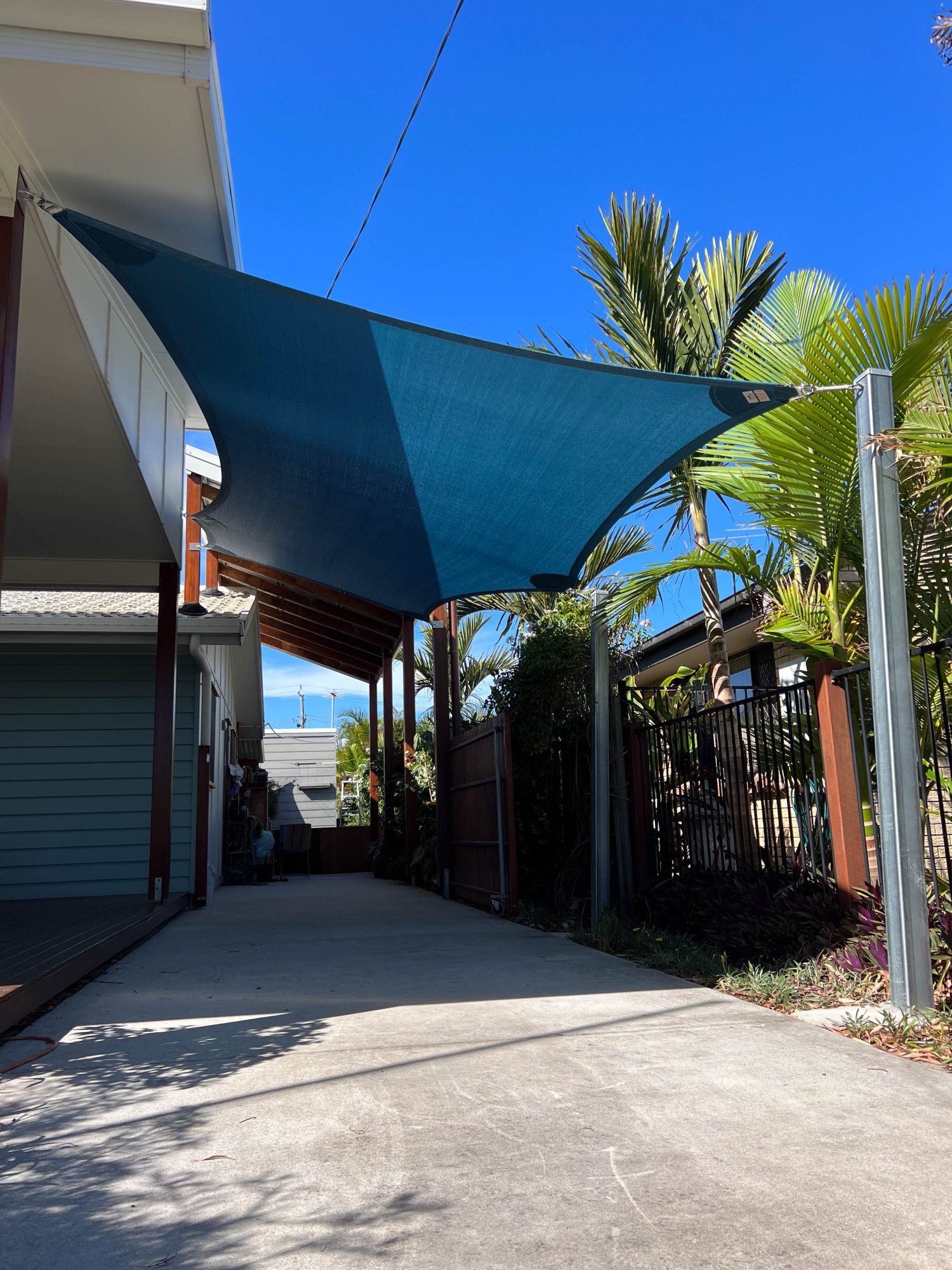
Hervey Bay gets long, hot summers, with mean maximums around 30.3°C in January and 30.2°C in February. Mornings also stay humid, with 9 am humidity averaging 69% across the year. That combo makes patios and pools feel punishing fast, so shade sails become a practical fix.
Heat and humidity shrink outdoor time
Heat loads up hard on concrete, pavers, and timber decks. High morning humidity makes that heat feel heavier, earlier in the day. A shade sail blocks direct sun on the surfaces you use most, so the area feels more comfortable.
Coastal glare makes spaces feel harsher
Hervey Bay’s coastal light bounces off sand, water, and pale paving. Glare hits eyes and skin even when the breeze feels cool. A shade sail takes the edge off that overhead blast and makes outdoor zones easier to use.
Summer rain disrupts plans
Hervey Bay averages about 1051 mm of rain each year, with wetter months in the warmer season. A sail over the right zone keeps outdoor living more consistent, so a short shower does not wreck the whole afternoon.
Sea breezes mean tension and fixings matter
Afternoon winds are common, and a steady breeze puts stress on fabric, posts, and anchor points. Good design keeps the sail tight, stable, and draining properly.
The Hervey Bay lifestyle stays outdoors
Hervey Bay living revolves around pools, decks, BBQs, and open yards. Without shade, those spaces go unused during peak sun hours. Shade sails extend the hours you actually want to be outside.
Where shade sails help most in Hervey Bay
Pool edges heat up quickly and need relief during midday sun. Patios and alfresco zones need shade for lunch and afternoons outside. Driveways benefit from cooler interiors and less UV wear. Kids’ play areas also become more usable through the day.
Book in with Mister Shade
Shout-out to Mister Shade for servicing Hervey Bay and the wider Burnett region, not just the Sunshine Coast. They offer a free, no-obligation design and quote, with engineering available on request.